
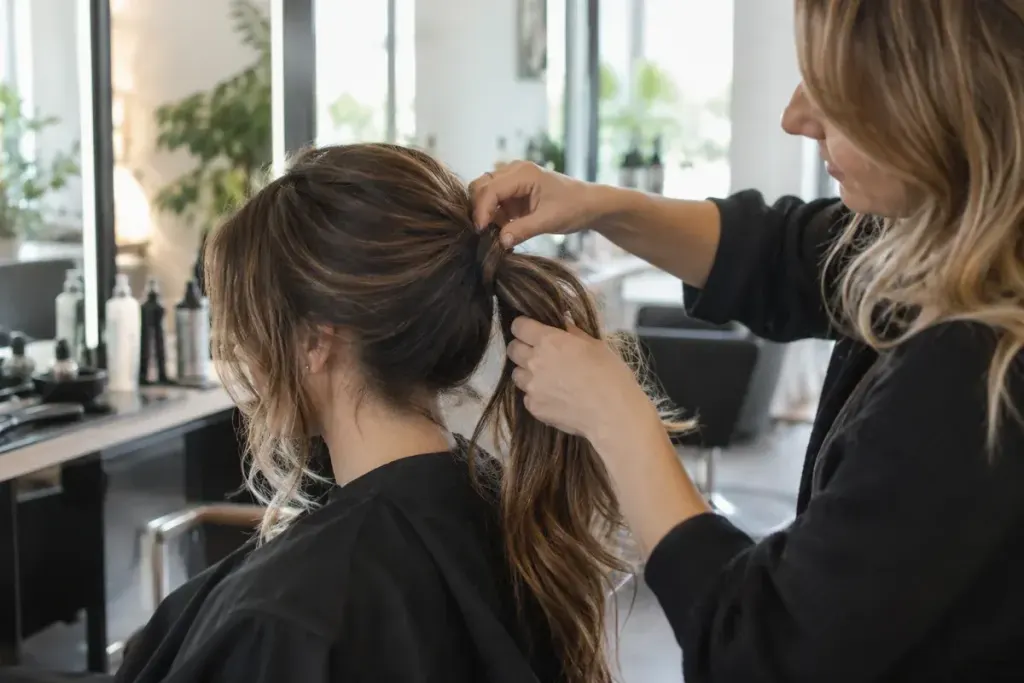
A new style can look polished while feeling uncomfortable. If it pulls, stings or makes you count the hours until you can take it down, do not treat the discomfort as proof that the style is secure.
Comfort belongs in the consultation, during the appointment and after you leave. You do not need a diagnosis before telling a stylist that a particular section feels too tight.
Say where it pulls while the style is being made
Use a specific description: behind one ear, along the hairline, at the crown or beneath an attachment. Ask for that area to be checked and adjusted before more work covers it. A reference photograph shows an appearance; it cannot tell the stylist what tension your scalp is experiencing.
The American Academy of Dermatology’s guidance on hairstyles that pull explains that repeated tension can cause traction alopecia and that advanced damage may be permanent. Pain is a reason to loosen the style, not something to accept as a normal finishing step.
Look at the whole routine
Think beyond the main hairstyle. How is it secured for exercise, sleep or a head covering? Do clips or ties repeatedly pull the same section? Describe those habits to your stylist so the practical version of the style can be discussed, not only the version photographed in the salon.
A useful note is short: the style, where discomfort appeared, what activity made it worse and whether an adjustment helped. Keep photographs private unless you choose to share them with a professional for a specific purpose.
Ask for options rather than enduring the first version
Questions might include whether the fastening can be repositioned, whether a lighter approach would suit the desired result, or whether a different style would be easier to maintain comfortably. The right answer depends on the individual hair, scalp and technique; a general article cannot set a safe amount of pulling for everyone.
Do not add products simply to mask irritation while leaving the pulling unchanged. If you notice thinning, persistent tenderness, bumps or other scalp changes, seek assessment from a qualified healthcare professional or dermatologist. Several conditions can affect the scalp, so avoid diagnosing the cause from a photograph alone.
Make comfort part of the final check
Before leaving, move your head normally and check whether any area still feels strained. Ask how the style should be cared for and removed, and what to do if discomfort develops later. If removal involves specialist attachments, get clear instructions rather than experimenting with a method that could damage the hair.
A successful appointment should leave you with more than a good mirror view. You should understand how the style fits your routine and feel able to speak up when it does not feel right.