
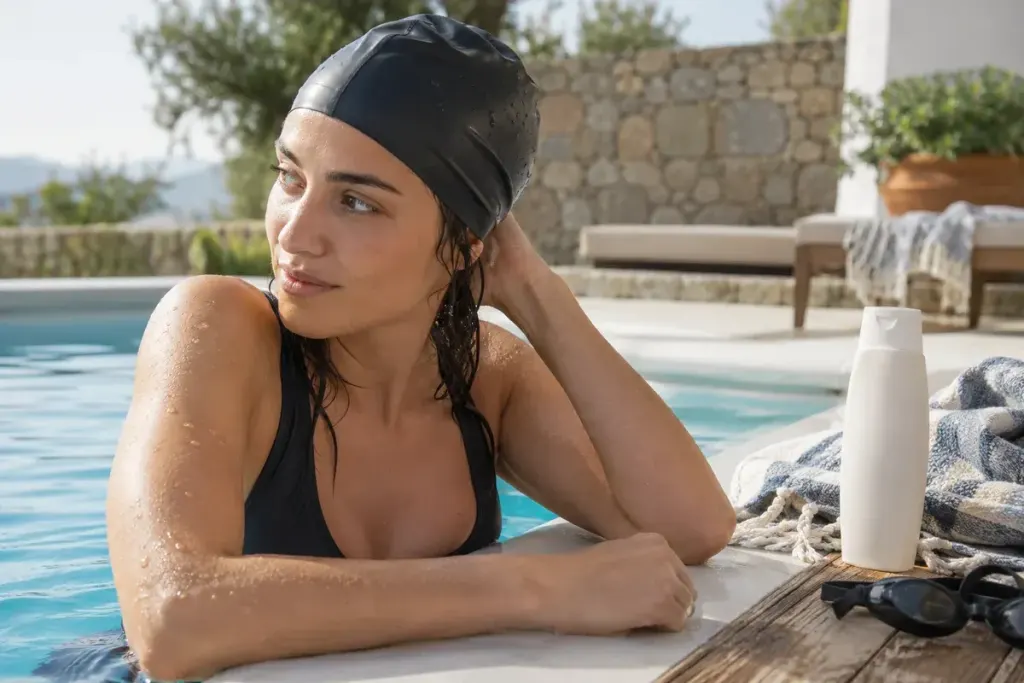
After swimming, hair can feel tangled and different from an ordinary wash day. The response need not be a shelf of new products. Start by changing the sequence: protect where possible, rinse promptly, then handle the hair gently.
The American Academy of Dermatology’s hair-care guidance recommends a swim cap and rinsing after swimming. A cap’s fit and design matter; it should not be treated as a guarantee that no pool water reaches the hair.
Pack for the five minutes after the swim
Put your usual suitable conditioner, towel and detangling tool where you can reach them easily. If the shower queue is long, knowing where another rinse point is can be more useful than bringing an extra styling product. Follow pool rules about products before entering the water.
When detangling, avoid forcing a brush through a knot from the roots. Work gently in small sections using an approach suitable for your hair texture and condition. Do not scrub the lengths vigorously with a towel simply to finish faster. Hair that is already chemically treated or damaged may need individual advice from a qualified professional.
For a regular swimmer, keep a brief note of what changed: swimming frequency, cap fit, products, and when tangling or irritation appears. Change one part of the routine at a time so you can tell whether it helps. A single rough-feeling day does not establish that a product is harmful or that you need an intensive treatment.
Persistent scalp irritation, significant breakage or unexplained hair loss deserves professional assessment. A salon can help with cosmetic handling, while a dermatologist can evaluate a scalp or hair disorder. Pool-day planning should make care gentler, not encourage repeated harsh washing in pursuit of a perfectly “stripped clean” feeling.