
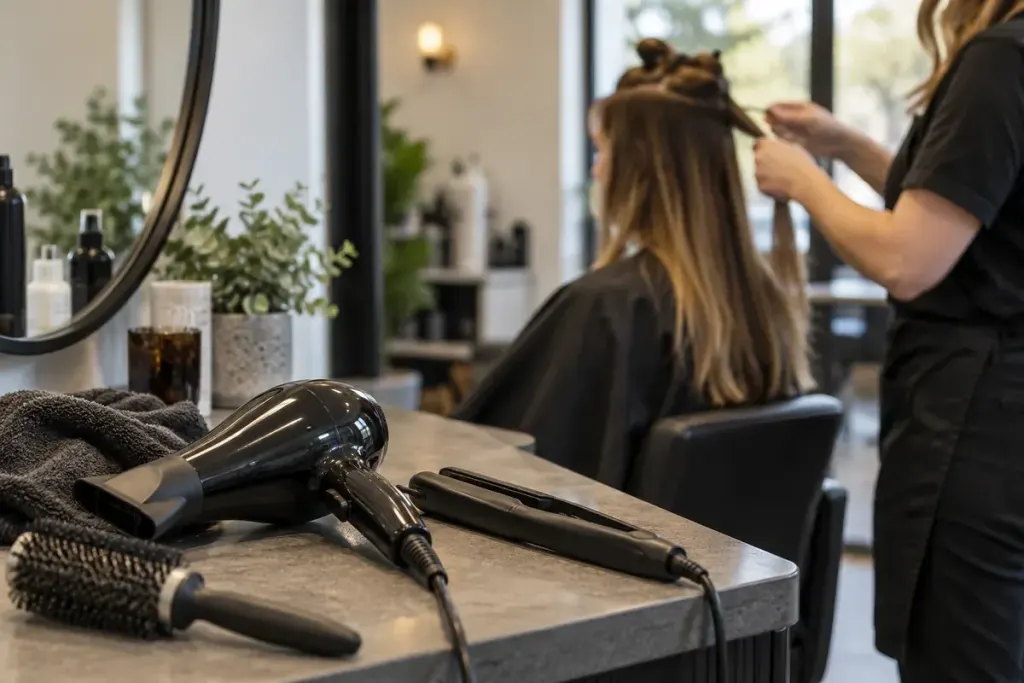
The morning is running late, so the temperature goes up and the same section gets another pass. It feels efficient, but a hurried routine can make it difficult to notice how much heat the hair is receiving.
A better starting point is the result you actually need. Smoothing one visible section for an ordinary day is a different task from rebuilding an elaborate style. The tool should serve that task rather than dictate a full routine every time.
Review the hair before the setting
Consider recent colouring, chemical treatments, breakage and how the hair feels during ordinary handling. If it is unusually fragile or the scalp is irritated, ask a qualified professional for advice instead of trying to solve the problem with more heat.
The American Academy of Dermatology’s styling guidance warns that excessive heat can damage hair and discusses using flat irons on dry hair with restrained heat settings. Follow the appliance’s instructions and personalised professional advice; there is no single temperature that suits every head of hair.
Make preparation reduce repetition
Detangle gently with an approach suitable for your hair, and divide it into manageable sections. A rushed, oversized section may tempt you to keep passing the tool over the same outer strands while the middle remains unchanged.
Use any styling or heat-protection product according to its directions. It does not make unlimited heat harmless. Keep hot tools away from skin and flammable items, use an appropriate resting surface and disconnect them after use.
Try a smaller styling goal
For your next routine, decide what “finished” means before starting. Perhaps the aim is to shape the fringe or tidy the ends, not achieve a completely different texture. Record the tool setting and roughly how many passes you needed on a typical section.
This is a practical observation, not a home damage test. If the result requires increasingly aggressive treatment, review the cut, products or styling method with your hairdresser. A style that works with your everyday texture may be easier to maintain between appointments.
Leave room for days without heated tools. Watch for persistent breakage, discomfort or noticeable hair loss and seek suitable clinical advice when needed. A successful routine should be repeatable without escalating the heat every time the clock is against you.