
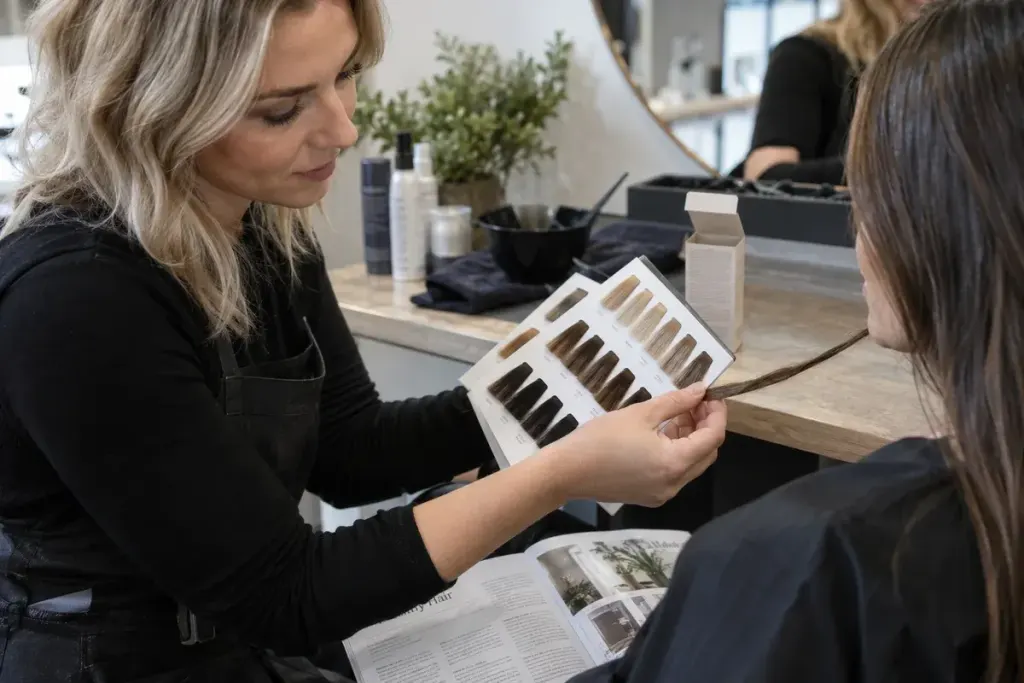
A small lock turns the perfect shade, so the colour appointment feels settled. But a pleasing result on hair does not answer whether the product could cause a skin reaction. Different tests are intended to answer different questions.
Before using a colouring product, read its instructions and discuss the salon’s procedure. Do not treat a familiar brand, a previous successful appointment or a strand sample as a guarantee that a new application will be trouble-free.
Ask what is being tested
A strand test can help assess the colour result and how a small sample of hair responds to the proposed process. Hair history matters: earlier colour, lightening and other treatments may influence the outcome.
A skin allergy or patch test has a different purpose and must follow the relevant product instructions and professional advice. The FDA’s hair-dye guidance explains the importance and limitations of skin testing, including that a reaction can still occur after a test shows no reaction.
Bring a useful history
Tell the professional about previous reactions and products used, including home colour and temporary tattoos such as black henna where relevant. Bring the product details if you have them. “Something made my scalp itch once” is important information even if you cannot identify the exact ingredient.
Also describe the result you want in practical terms. A reference photo does not show the model’s starting colour or treatment history. Ask what can reasonably be assessed from a strand test and whether the desired change would require a different plan.
Leave enough time for the procedure
Testing should not become a box ticked immediately before an appointment when the instructions require a waiting period. Ask about timing when booking, and do not proceed if the required process has not been completed.
If a test or application causes a reaction, stop using the product and seek appropriate medical advice. Severe symptoms such as breathing difficulty or swelling affecting the mouth or throat require urgent local medical help. Do not attempt to conceal a reaction so an appointment can continue.
Keep the product name and details of any problem for future consultations. A good colour conversation distinguishes appearance, hair condition and skin safety instead of allowing one successful sample to stand in for all three. That distinction helps you make a more informed decision about whether to proceed, change the plan or seek further advice.