
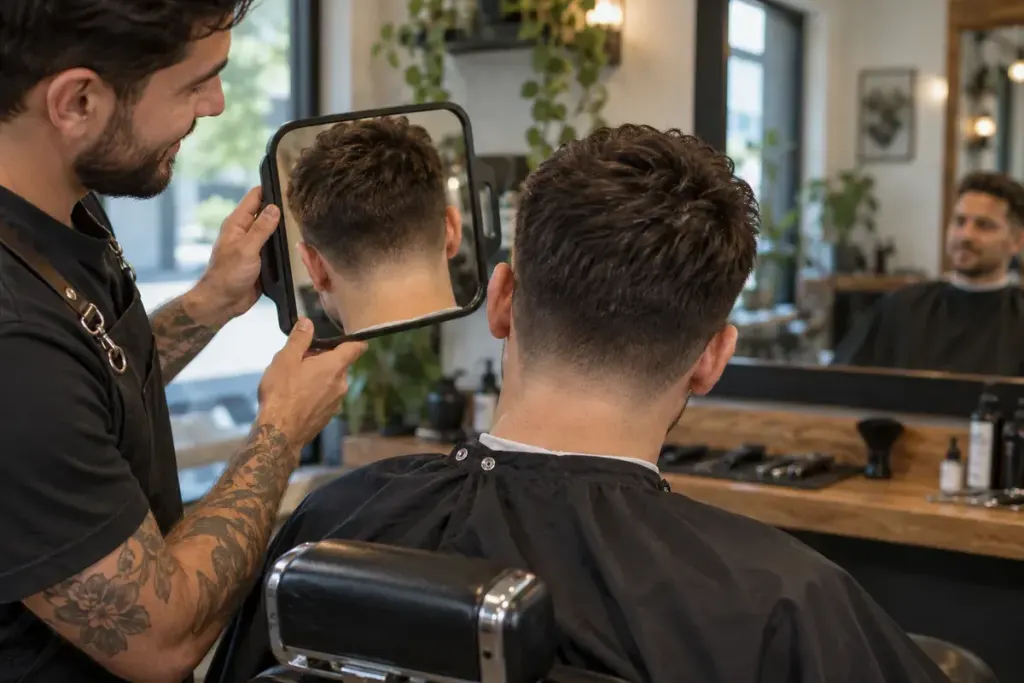
The front of a short haircut gets most of the attention in a reference photograph. The neckline may be hidden, even though it strongly affects how the back of the cut looks and how you notice regrowth.
Before the barber finishes that area, discuss the shape you want. A squared or rounded outline creates a defined boundary; a tapered finish gradually reduces the hair toward the natural edge. Terminology can vary, so ask to see what the barber means.
Use the mirror to make the decision concrete
Ask for a view of the back and identify the natural hairline. Discuss how the proposed finish works with that pattern, the length above it and the rest of the cut. A shape copied from another person’s photograph may sit differently on your neck.
Bring a back-view reference where possible. Explain whether you like a crisp outline or a softer transition rather than relying only on a style name.
Include the weeks between visits
Tell the barber how often you realistically return. New growth below a sharp outline can become visually noticeable in a different way from growth through a tapered edge. The best choice for you includes the maintenance you are willing to arrange.
Ask which areas should be left alone between appointments. Trying to raise the neckline repeatedly at home can change the shape more than intended. Do not improvise close trimming where you cannot see and control the tool safely.
After the appointment, take a clear photograph of the back with permission from anyone helping. Compare it a week or two later and note what you like about the grow-out.
That small record makes the next consultation more specific. You can discuss the actual outline and maintenance experience instead of asking for “the same, but somehow tidier” without a shared picture of the difference.