
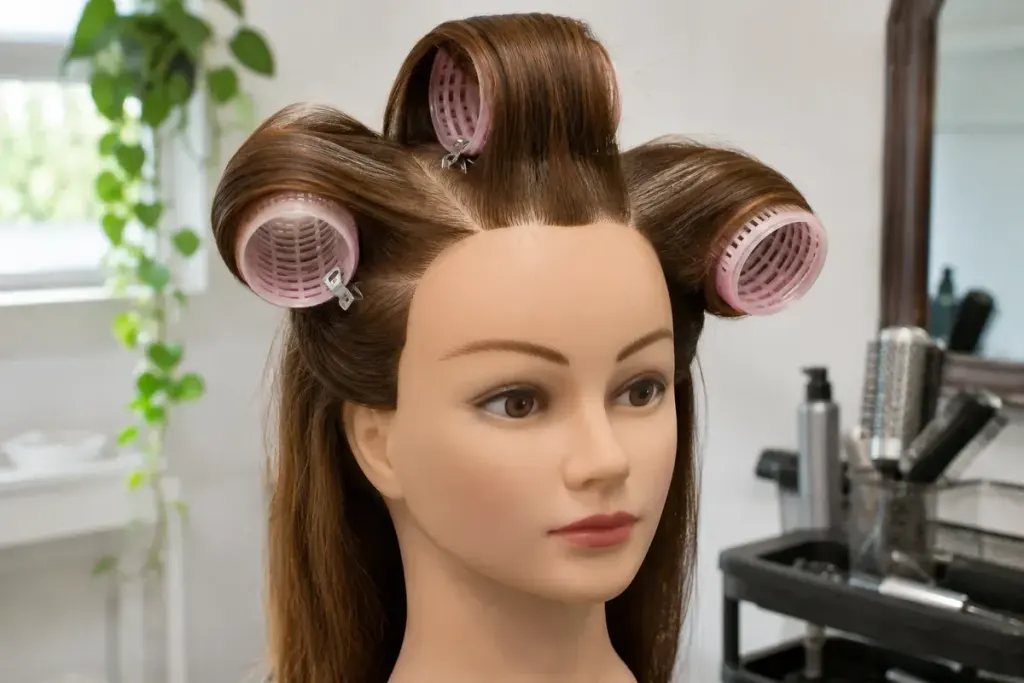
You can use the same roller twice and get a different shape at the roots. The roller’s diameter matters, but so does where it rests in relation to the section of scalp from which the hair grows. That relationship is called base placement.
In a basic set, on-base placement brings the roller over its section and encourages more lift. Off-base placement lets it sit away from that base and generally produces less root volume. Half-off-base sits between those arrangements. Sam Villa’s teaching guide connects the same principles to positioning a round brush during a blow-dry.
Separate the curl from the lift
Imagine wanting a gentle bend through the ends but a flatter outline at the side of the head. Reaching automatically for a smaller roller changes the bend as well as the overall result. Changing placement may address the root shape more directly.
A useful salon conversation is: “I like this amount of curl, but I want less lift here.” Point to the area rather than describing the entire hairstyle as too big. The stylist can then explain the sectioning and placement that suit your hair and intended finish.
Compare one variable at a time
For a comfortable home experiment, keep the roller type, section size and preparation similar and compare two placements on separate attempts. Take a photograph from the same angle after the hair is released and settled. Judge the root shape separately from the ends.
Do not compensate for an awkward placement by pulling harder. A roller that pinches, creates painful tension or drags the scalp needs repositioning. Heated tools and rollers also require their own temperature and use instructions; more heat is not a substitute for a suitable set.
Hair length, density, existing texture and the way it dries or cools will affect the result. Treat the terminology as a way to make a controlled adjustment, not a promise that every head of hair will produce the same amount of volume.