
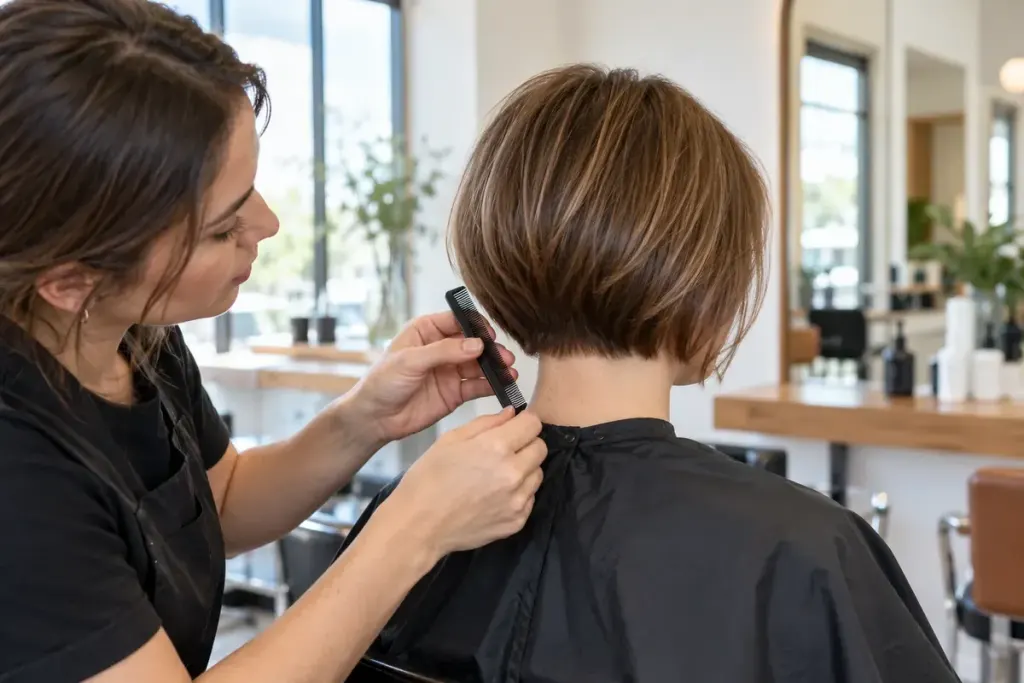
Two bobs can finish at a similar length and still have very different shapes. One may fall with a strong, continuous edge; another may gather fullness through the back. Graduation helps explain that difference, but the word alone is not a complete haircut specification.
Graduation uses changes in length and cutting angle to organise weight within the shape. Hairdressing training connects cutting angles, weight distribution and the degree of graduation; these relationships appear in the City & Guilds hairdressing qualification handbook. The practical result also depends on the hair and how the stylist combines techniques.
Point to the shape you mean
Bring a side and rear view of a haircut you like, if available. Instead of saying only “more layers,” identify the part that interests you: fullness near the back of the head, a close neckline, a soft outline or longer pieces around the face.
Then describe what you do at home. A reference styled with a round brush may not show how the same cut behaves after air drying. Tell the stylist whether you usually tuck the hair behind your ears, tie it back or use heat tools.
A useful question is: “Where would the weight sit on my hair, and what would I need to do to maintain that shape?” It connects the technical term to the result you will live with.
Check the profile before discussing the next appointment
At the finish, ask to see the back and sides in a mirror. Notice the outline and where the silhouette projects. Ask which area is likely to lose its intended shape first as it grows, rather than assuming every graduated cut needs the same appointment interval.
You do not need to prescribe a cutting angle to have a precise consultation. Clear references, honest styling habits and a shared description of the weight distribution give the stylist more useful information than a fashionable haircut name on its own.