
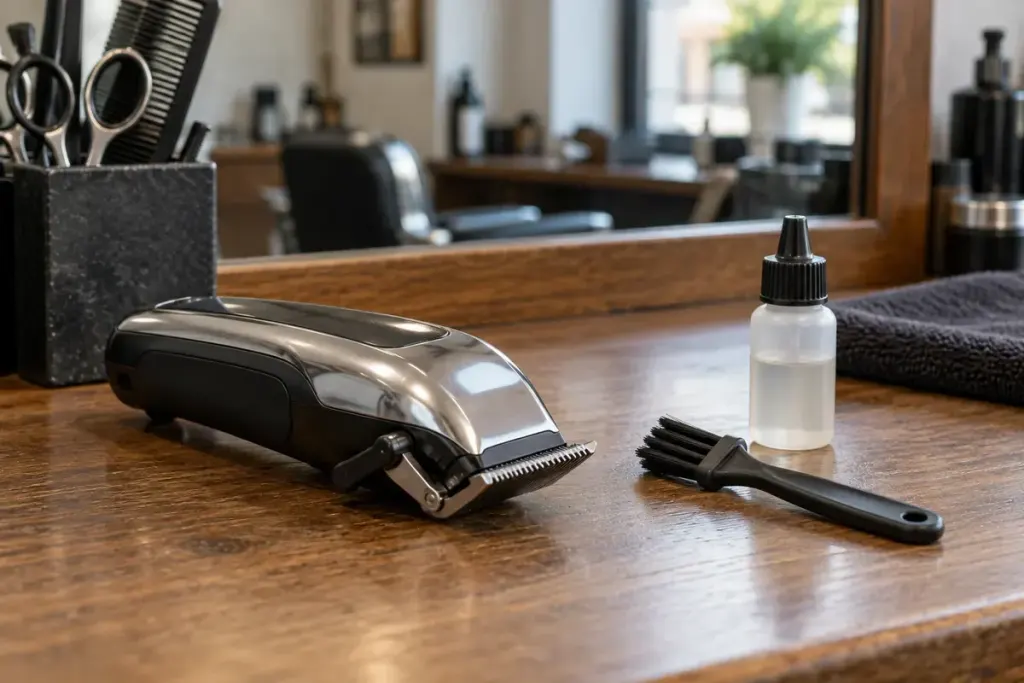
Loose hair collects around a clipper blade while oil gradually leaves its moving surfaces. Adding more oil over a packed layer of cut hair does not complete the cleaning job. The two tasks belong in a sequence.
First identify the exact clipper and its manual. A detachable blade may be washable even when the clipper body is not, while another model may prohibit rinsing both. Wahl’s model-specific maintenance instructions illustrate why a general “waterproof” assumption is unreliable.
A useful routine has four stages
- Make it safe to clean. Switch off and disconnect power as instructed before removing attachments or brushing the blade.
- Remove the hair. Use the supplied brush or the method specified for the blade. Do not push debris farther into the housing.
- Lubricate as directed. Use the approved clipper oil, quantity and application points. Follow the manual if the motor must run briefly to distribute it.
- Finish and store. Switch off before wiping away excess, then protect the clean, dry blade in its guard or case.
Keep fingers and cloth away from moving teeth. Do not substitute cooking oil, hair oil or an unrelated household lubricant simply because it feels slippery. A product suitable for one mechanism can leave an unwanted residue in another.
Cleaning is also a chance to notice damage. Missing teeth, a loose blade or an unusual pull on the hair needs attention before the next cut. Oil does not repair a damaged cutting edge, and random screw adjustments can make alignment worse.
If several people share a tool, follow the manufacturer’s disinfection guidance and applicable salon hygiene requirements. Brushing away visible hair and disinfecting are different jobs; the appropriate product must be compatible with the equipment.
Put the model number and manual link beside your supplies. That small preparation keeps the next maintenance session focused on the tool you actually own, rather than a video demonstrating a similar-looking clipper with different care instructions.