
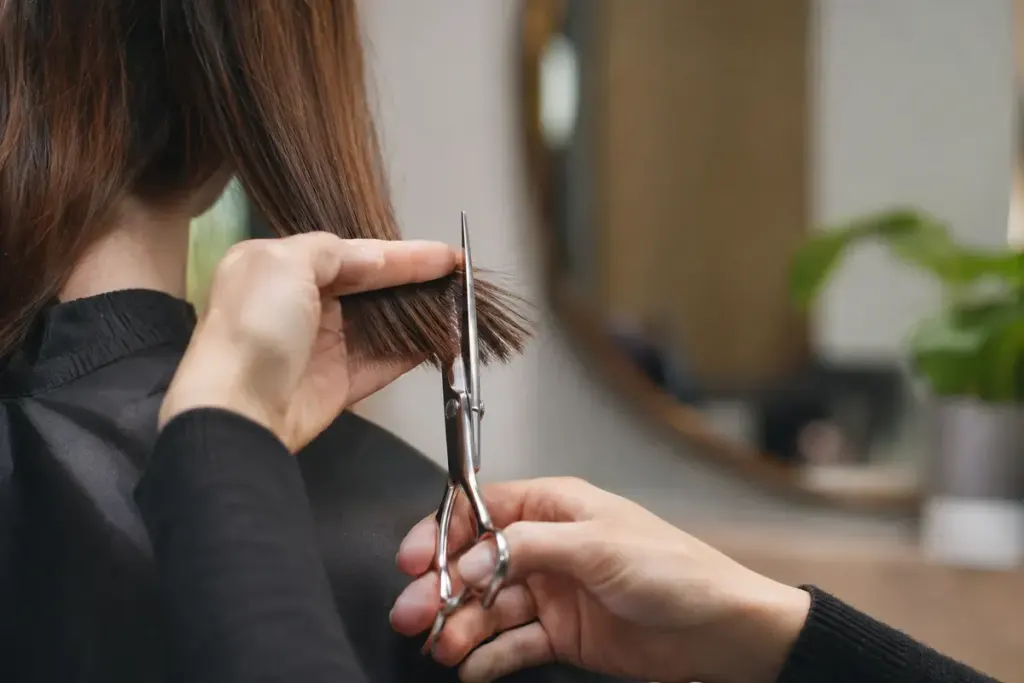
A haircut can keep roughly the same outline yet lose its hard, freshly cut edge. One technique a stylist may use for that change is point cutting: working into the ends with the tips of the scissors rather than making only a continuous line across them.
The result depends on the section, direction and depth of the work. Sam Villa’s point-cutting tutorial distinguishes techniques for different hair textures and explains why excessive removal can produce an unwanted result. “Add texture” is therefore an incomplete instruction.
Name the part you want changed
During a consultation, separate three preferences: the overall length, the density visible at the perimeter, and how softly the ends sit together. You may like a strong outline around a bob while wanting less abrupt movement in a fringe. Those are more useful observations than asking for the same technique everywhere.
For an illustrative comparison, picture two people bringing the same shoulder-length reference photo. One likes the solid silhouette; the other likes the broken, airy tips. Without that conversation, they could agree on a length while expecting very different finishes.
Bring the everyday version of your hair
Explain whether the reference image shows a blow-dried finish, whether you normally wear your natural texture, and how much styling you intend to do. Ask the stylist to show the area they propose to soften before taking more away. This makes the decision visible rather than relying on salon vocabulary alone.
A helpful question is: “Will this mainly alter the outline, remove internal weight, or do both?” Another is: “Can we assess the ends before adding more texture?” Neither question prescribes a method; both invite the professional to connect the method with your preference.
Judge the edge, not the name
At the finish, look at the haircut from the front and sides and watch how it settles after movement. Note anything you like for the next appointment. Point cutting is one tool in a larger design decision. Understanding that decision is more useful than assuming the technique itself guarantees softness, volume or an easier morning routine.