
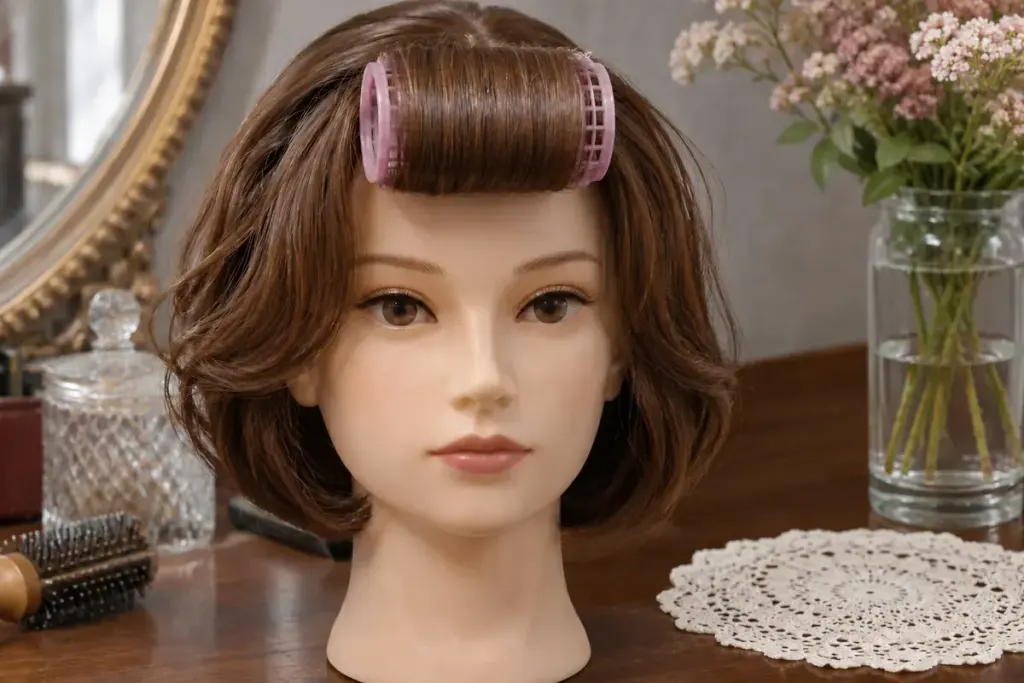
A fringe can be neatly rolled and still settle in the wrong direction. Before changing the roller size or adding more product, look at the path the hair takes around the roller.
This small styling exercise is about observing direction. Use an ordinary non-heated roller that is appropriate for your hair, and follow its instructions. Work gently on a manageable section; a roller should not tug at the scalp or trap the ends in a sharp fold.
Change one thing at a time
Begin with the same section you normally style. Comb it gently into the intended direction, place the ends smoothly and note whether you are winding the hair under towards the forehead or away from the face. Keep the section size, preparation and roller size consistent when comparing results.
If damp-setting, let the section dry as required before removing the roller. Unwind it rather than pulling it through the hair. Take a quick photograph immediately after removal, then another after arranging the fringe with your fingers. A mirror view alone can make two attempts difficult to compare.
On another occasion, try the alternative direction if it is comfortable and suits the result you want. Do not repeatedly roll and tug the same section just to force a dramatic comparison. Record which method brings the ends closer to your desired shape and whether it creates too much lift at the roots.
Bring the observation to the haircut conversation
A cowlick, the fringe length and the way the hair naturally falls can all affect the result. If the hair keeps separating or bending unexpectedly, show the stylist both the reference look and your two photographs. Explain the preparation and direction used, not just that the fringe ‘will not behave’.
That gives the consultation something specific to work with. A small change in daily handling may help, or the cut may need to account for the growth pattern. More heat is not automatically the next useful experiment.