
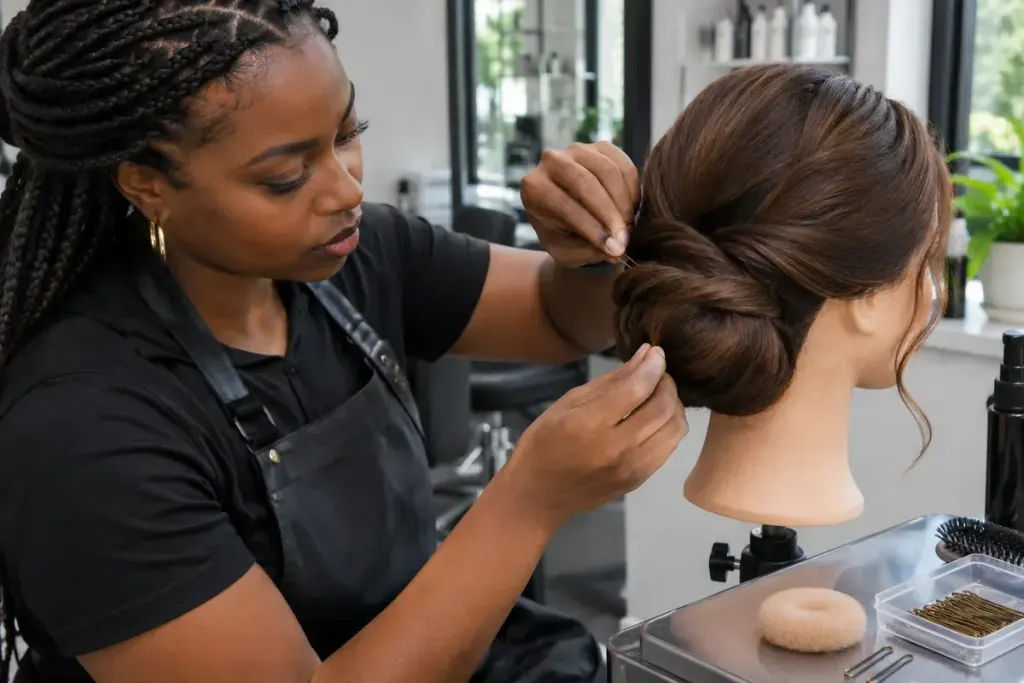
A full-looking bun does not always depend on a large amount of natural hair. Padding can provide a hidden shape underneath, with the hair arranged over it. Knowing that helps you discuss a reference photograph without assuming your own hair must somehow produce all of its volume unaided.
In Sam Villa’s bridal-upstyle tutorial, optional padding is fitted around a ponytail base and secured before the style is finished. That is one construction method. The size, placement and fastening should suit the style and the person wearing it rather than being copied automatically.
Bring the silhouette into the conversation
At a trial, describe where you want volume: high at the crown, low at the nape or spread across a wider bun. A front-view photograph alone may hide the most useful information. Bring a side or back view when possible, and ask whether padding, extensions or your own hair are creating the effect.
Coverage matters as much as height. Ask the stylist to show the finished shape from several angles and under ordinary light. A colour that disappears beneath one section may show where the hair separates or moves.
Wear the trial for a while
Turn your head, sit against a chair back and try any veil, headpiece or collar that will be part of the day. Report pulling, pressure or a pin that feels sharp. Discomfort is useful information to correct, not evidence that the style is secure.
Ask for a simple removal sequence before leaving. It should be clear which pins hold the padding and which hold the visible hair, so you do not pull the whole structure out at once. Keep supplied pieces and their care instructions together if you will use them again.
The most successful padding is not the largest piece that can fit. It is the amount that supports the intended outline while allowing the hair to sit naturally and the wearer to move comfortably.