
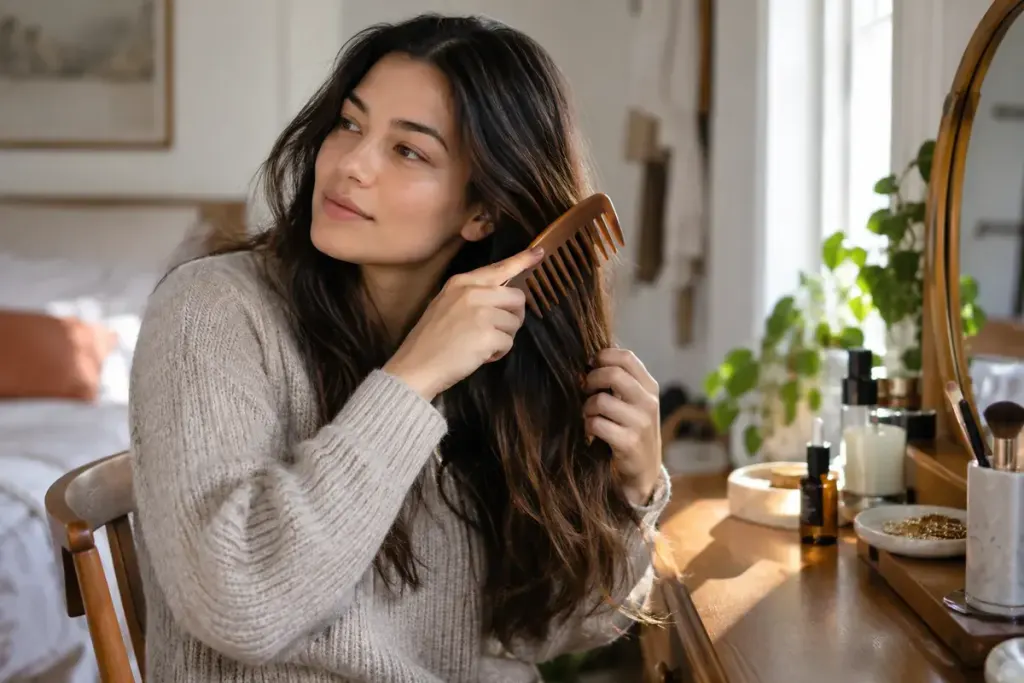
Hair that stands away from a jumper on a dry morning may behave differently from hair that expands in damp weather. Calling both “frizz” can send you towards the same product even when the situations are different.
Start by observing the pattern rather than diagnosing it from one photograph. Note when the flyaways appear: after brushing, after removing a hat, during drying or later in the day. Short new growth and broken hairs can also look similar from a distance, so persistent changes deserve a better look than a quick styling guess.
Make one small adjustment
The American Academy of Dermatology’s leave-in conditioner guidance explains that a suitable product can help with static, flyaways and frizz. It recommends using a small amount where the hair needs it and following the product’s application instructions. A leave-in product is not automatically a heat protectant; that claim should appear on its label.
For an illustrative trial, keep your usual wash routine but change the amount or placement of one compatible conditioning product. Photograph the result in the same light after drying and later in the day. If you change shampoo, brush, drying method and product together, it becomes difficult to know what helped.
More product is not always the useful next step. Fine hair may become weighed down while the original handling problem remains. Equally, repeatedly pulling a brush through hair to force every strand flat can create more friction and discomfort.
Bring observations to the salon
Tell the stylist what happens between appointments, including whether the problem changes with weather or clothing. A photo of the difficult moment can be more informative than a picture taken immediately after a professional blow-dry.
Stop a product that causes irritation and seek appropriate advice for persistent scalp symptoms, unusual shedding or obvious breakage. Styling advice cannot establish the cause of a medical hair or scalp problem.
The aim is a manageable routine that suits your hair, not the removal of every small strand that sits differently. Good observations make that routine easier to adjust.