
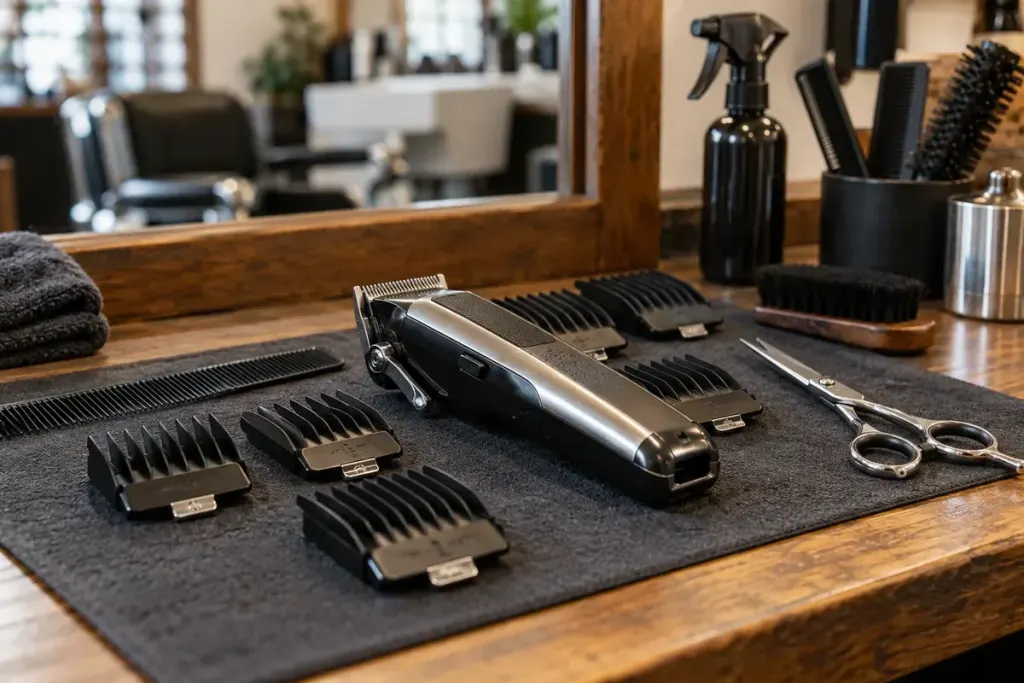
You ask for the same guard number used at your last appointment, but the result looks shorter. Before assuming the barber ignored you, check what that number meant on the previous tool.
A guard is a physical attachment, and its marked number belongs to a particular range. Many common systems are familiar to barbers, but a number without the brand, stated length or cutting method leaves room for misunderstanding.
Describe the result in more than one way
Bring a clear photograph of your own haircut when you liked it. Say which areas should be shorter, whether you want scalp to show and how the sides should meet the longer hair. If you know the previous attachment’s stated millimetre or inch length, share that too.
For an invented example, “I used a number two” is less informative than “The sides were short but not skin-close; this photograph shows the result after the cut.” The barber can then explain the tool and technique they propose.
Ask about the lever and the direction
Some clippers have an adjustable lever, and the finish can depend on how the hair is approached. Hair texture, growth direction and the blending technique also affect what you see. A guard label is not a promise that every strand will look identical on every head.
If you are uncertain, ask whether the cut can begin conservatively and be reviewed before going shorter. It is easier to remove more hair than to restore length during the same appointment. Agree where the check-in should happen so it does not interrupt the barber unexpectedly.
Leave with a usable reference
After a result you like, note the salon’s description and ask which details are useful for the next visit. A photograph from the side and back, taken with permission, can be more helpful than a single number in your phone.
For home tools, follow the manufacturer’s attachment and cleaning instructions and stop if the clipper pulls or irritates the skin. Whether at home or in a salon, use the number as part of the conversation—not as the whole specification.