
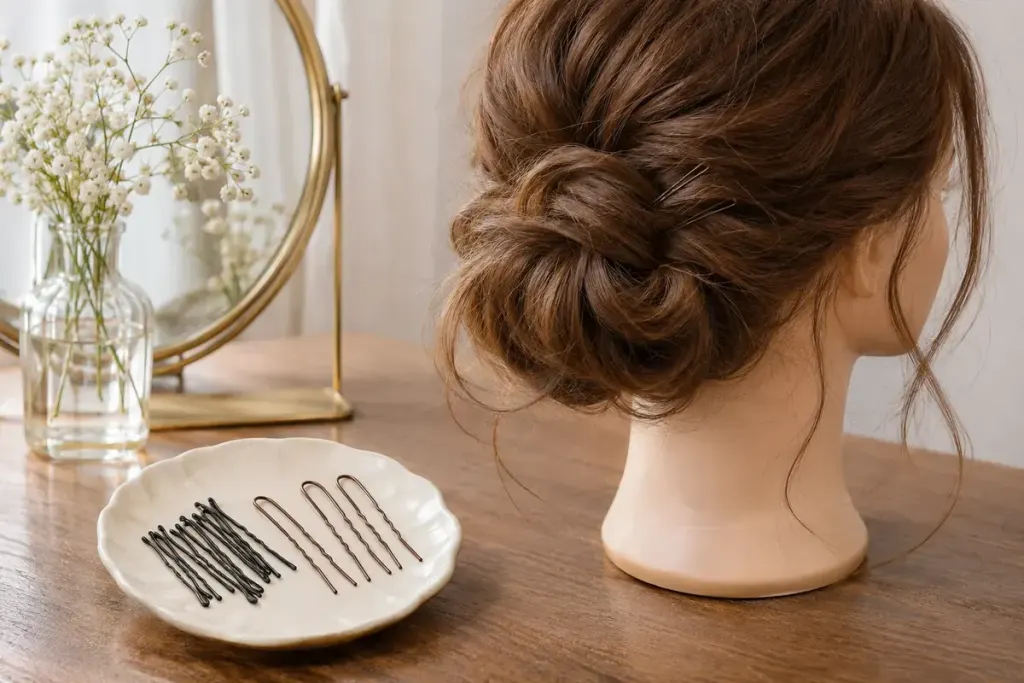
A bobby pin is small enough to disappear into a hairstyle, which makes it easy to overlook how much hair it is being asked to hold. When a pin keeps sliding, adding several more is not always the most useful first response.
Compare a closed bobby pin with an open U-shaped hairpin. Their shapes suggest different ways of supporting a style. The CBSE beauty and wellness learning material illustrates several hairpin types. Treat the names as a way to identify the tool, then inspect the actual design in your hand.
Start with the section, not the number of pins
A bobby pin grips a relatively small section between its arms. If the section forces those arms far apart, try taking less hair rather than pushing harder. A pin that is already bent out of shape may no longer behave like a new one.
Place it where it supports the intended fold or strand without pressing sharply into the scalp. Test the hold with ordinary head movement. The style should not depend on a painful point of pressure that becomes noticeable only after leaving the mirror.
An open hairpin may help support a bun or twist through its path within the gathered hair. That does not make it an interchangeable replacement for every bobby pin at the hairline. Try one accessory at a time so that you can tell what it contributes.
A quick inspection before reuse
- Check for a rough end or damaged protective tip.
- Look for corrosion, residue or a shape that has been forced open.
- Remove a pin that catches or pulls instead of repeatedly repositioning it.
Keep clean pins in a small dry container, separate from ones that need cleaning or replacement. Avoid using your teeth to open them; choose a suitable pin and a manageable section instead.
When taking the style down, remove pins deliberately and support the hair with the other hand. If a pin seems trapped, loosen the surrounding twist before drawing it out. A secure hairstyle should also have a gentle way to come apart.