
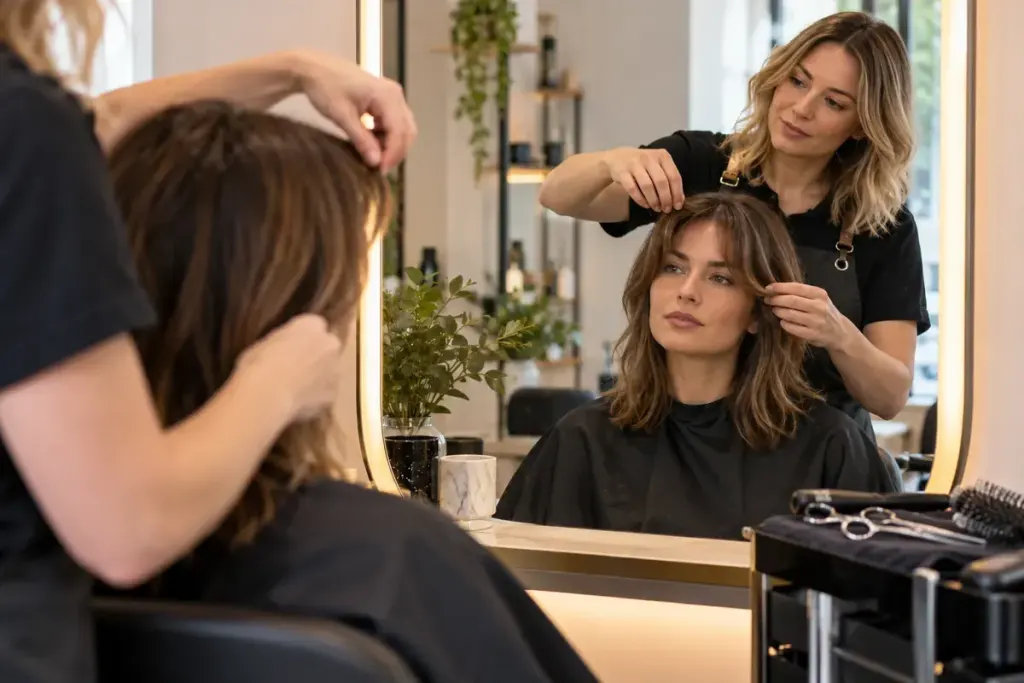
A fringe looks smooth in the salon mirror, then behaves differently after the first wash at home. Before choosing the cut, discuss the routine that will have to support it on an ordinary morning.
Describe the time you actually spend
Tell the stylist whether you air-dry, use a dryer or normally leave the house with minimal styling. Mention the tools you own and the steps you are willing to repeat. A look that depends on a technique you dislike may be a poor match even when the reference photograph is appealing.
Show how the front section naturally falls and explain any familiar difficulty, such as a section that separates or changes direction. Let the stylist assess it rather than trying to flatten everything into the reference image before the appointment.
Discuss the shape in daily situations
Consider glasses, headwear, work requirements and how often you tie your hair back. Ask what the proposed fringe will look like when it is not freshly styled. If you exercise frequently, discuss how you would keep it comfortable without pulling it tightly.
Use photographs to explain what you like, but identify the feature rather than asking for an exact copy of someone else’s hair. You might prefer a softer edge, a more open forehead or pieces that can be moved to either side.
Ask for a demonstration you can repeat
Watch the direction of drying, the amount of product and the way the stylist finishes the front section. Ask them to explain any step you do not understand. Avoid using excessive heat to force a result at home; follow the tool’s instructions and professional advice for your hair.
Before leaving, ask about maintenance and what to do as the fringe grows. Do not attempt a rushed correction with unfamiliar scissors because one morning looks different. A successful salon conversation connects the cut with your real routine, not just the appointment’s final photograph.