
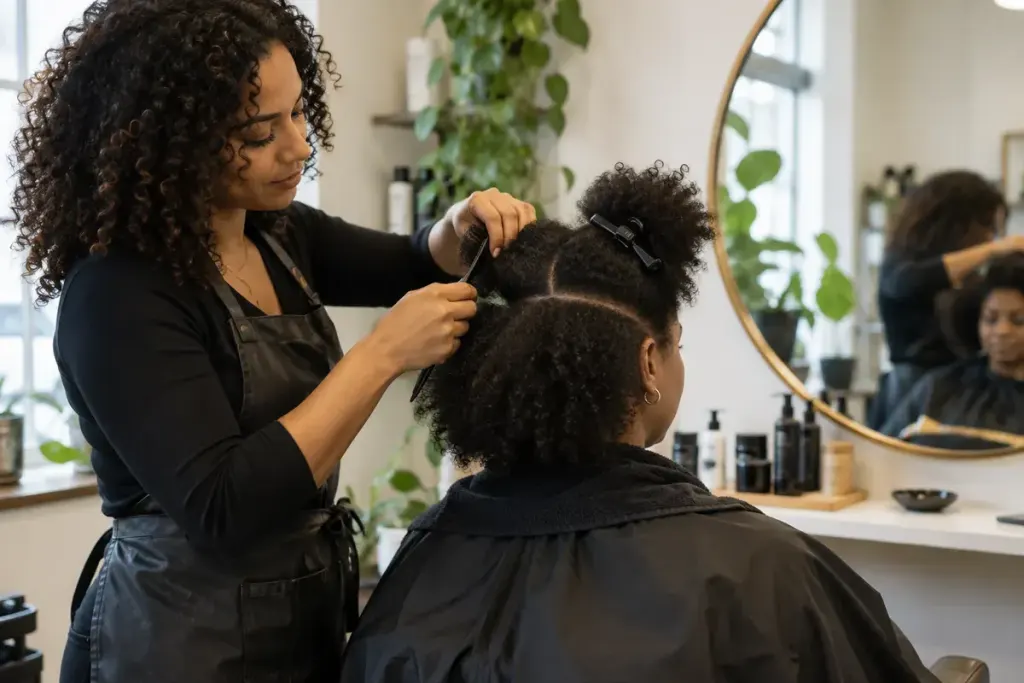
“My hair is thick” can mean two different things at a salon. You might have many fine strands packed closely together, or fewer strands that each feel relatively coarse. The same word can lead the stylist towards two different assumptions.
L’Oréal’s Hair.com explanation of hair density distinguishes the amount of hair from the diameter of individual strands. Those characteristics can occur in different combinations. Curl pattern, length and the way the hair is arranged also influence how full it looks.
Describe the problem you are actually trying to solve
Instead of asking only for a cut “for thick hair”, explain where the routine becomes difficult. Perhaps the lower layers remain damp after you think you have finished drying, or a product spreads heavily on the surface while the inside sections receive little. Those observations give the consultation something concrete to work with.
For example, a person with plentiful fine strands might need more manageable sections while styling without wanting a heavy coating on each strand. Another person may have coarse strands but prefer to retain visual fullness. Neither situation can be solved reliably from the single adjective “thick”.
Make a small, observable trial
Ask the stylist to demonstrate a section size and a modest product amount on your actual hair. Watch where it is placed and how it is distributed. Then try to reproduce that part of the routine yourself before committing to several new products or a large change in the cut.
A short note can capture the useful detail: which section was worked first, how much product was used and what the finished hair felt like. Avoid treating a ponytail measurement or one photograph of a parting as a medical assessment of density.
If your hair has changed noticeably, especially with sudden shedding, scalp symptoms or patchy loss, bring that to a qualified healthcare professional. A styling consultation can help you manage the hair you have, but it should not diagnose the reason for a change.
Precise language makes the everyday conversation easier: how many strands, how individual strands feel, and what you want your routine to do.