
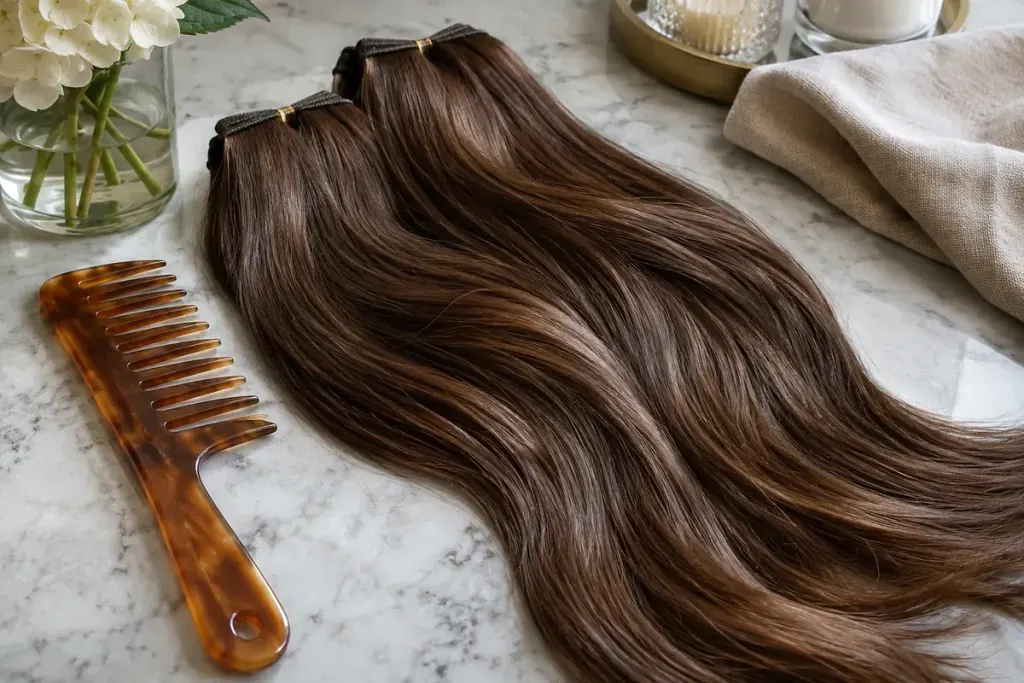
Two bundles of human-hair extensions may feel similar when new, but the direction of their cuticles is one detail worth asking about. “Human hair” describes the source; it does not explain how the strands have been collected, aligned or processed.
Great Lengths describes Remy hair as having the cuticle layer intact with the strands running in the same root-to-tip direction. This is a manufacturer’s explanation of the term, not an independent guarantee for every product carrying it.
Keep three questions separate
First, ask about cuticle alignment. Second, ask about processing, including colouring or other treatment. Third, ask about the attachment method and maintenance plan. A favourable answer to one does not settle the other two.
For example, a bundle can be aligned yet still have been coloured. Equally, a description about fullness from top to bottom addresses the distribution of hair lengths, not the direction of the cuticle. Writing the answers beside the specific product name makes the distinctions easier to remember after a consultation.
The same manufacturer distinguishes Remy alignment from “double drawn” fullness. Treat those as separate features when reading a specification rather than as interchangeable quality words.
Discuss the life of the extensions after fitting
- Which washing, brushing and drying instructions apply to this hair and attachment?
- Can the product be coloured, and who should assess that?
- What should you do if tangling develops near the bonds or weft?
- When should the fit be reviewed or the extensions removed?
Bring a realistic account of your routine, including swimming, heat styling and how much maintenance time you have. Do not test the cuticle by pulling or roughly rubbing a display strand. Ask the salon to demonstrate the product and explain its provenance instead. Alignment is a useful technical question, but comfort, a suitable installation and a manageable care plan are part of the same purchase decision.