
You move house, keep the same shampoo, and find that your hair no longer feels quite the same after washing. Water is one variable worth investigating. It is not the only explanation, and the feel of your hair alone cannot identify what is in the supply.
Hard water contains more dissolved calcium and magnesium than soft water. Hair-product manufacturers also discuss other metal deposits in their treatment guidance. These terms overlap in everyday marketing, but a claim about removing one kind of deposit does not tell you everything about a product.
Look for your water supplier’s hardness information for the relevant area. Note whether the change in hair feel began after a move, a holiday, a plumbing change or a new styling product. Keep the observations modest: “harder to rinse clean” is useful; “definitely mineral damage” is a diagnosis you have not established.
Then check what your current shampoo is intended to remove. L’Oréal Professionnel’s discussion of mineral buildup describes its own product approach. It is a manufacturer’s explanation, not independent proof that its range is necessary for every person with hard water.
Change one thing you can evaluate
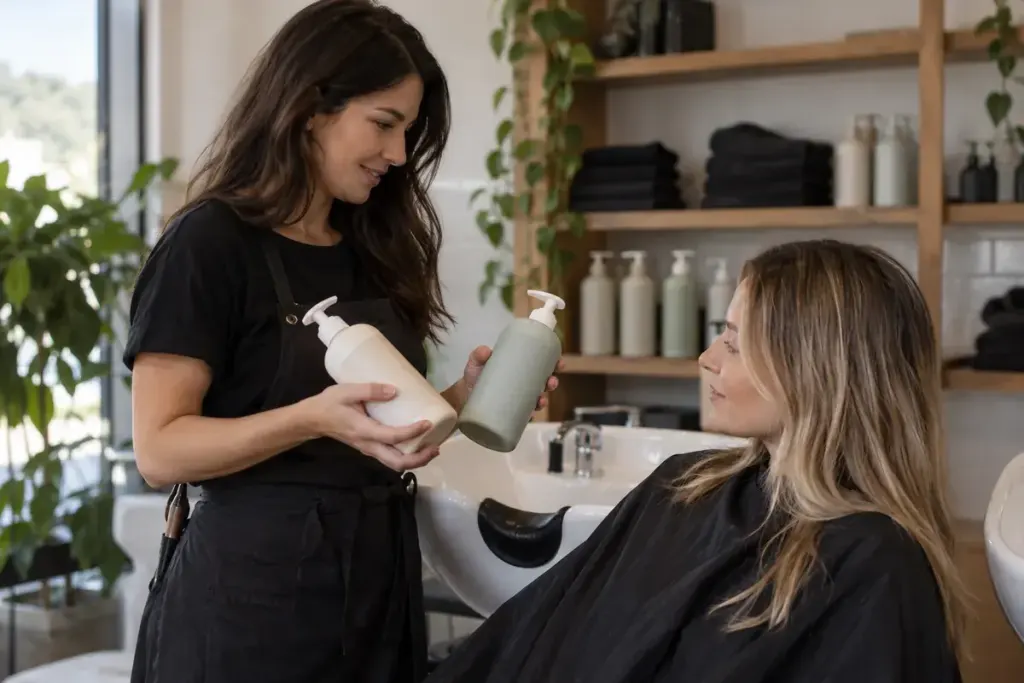
Ask a qualified stylist about a suitable cleansing or chelating product for your hair and any colour treatment. Follow that product’s directions rather than assuming a stronger wash should be used daily. Avoid making a homemade chemical mixture to imitate a salon treatment.
A simple record can include the product, date used, ease of combing and how the hair feels once dry. Keep the rest of the routine stable for the comparison where practical. If you change shampoo, conditioner, heat styling and water filtration together, the result will not tell you which change mattered.
Persistent scalp irritation, unusual shedding or pain needs appropriate healthcare advice, not repeated stripping washes. For an ordinary texture problem, the useful goal is narrower: establish whether buildup is plausible, choose a compatible response, and judge the result without treating every difficult hair day as the same problem.